SEARCH WHAT YOU WANT

2026-04-21
Process Methods for Mark-Free Bending
Mark-free bending is a precision bending process that uses special techniques or material treatments to avoid indentations or scratches on the workpiece surface that occur during conventional bending. Its goal is to eliminate or greatly reduce bending marks or abrasions on the outer surface of the sheet metal, making it particularly suitable for products with high demands on surface quality. There are four main ways to achieve mark-free bending: the Flip-Plate Type, the Ball-Bearing Type, the Rubber Type, and the Anti-Mark Film Padding Method.
1. Flip-Plate Type
1.1 Working Principle
The lower die of a mark-free flip-plate die uses a flexible rotating plate. When the upper punch presses down, the flip plate does not come into direct rigid contact with the sheet. Instead, it "supports" the material through elastic deformation or a sliding action, distributing the force more evenly and avoiding concentrated local pressure. During the entire bending process, there is almost no relative sliding friction between the sheet and the flip plate. This fundamentally eliminates the indentations and scratches caused by the intense sliding friction in conventional bending.
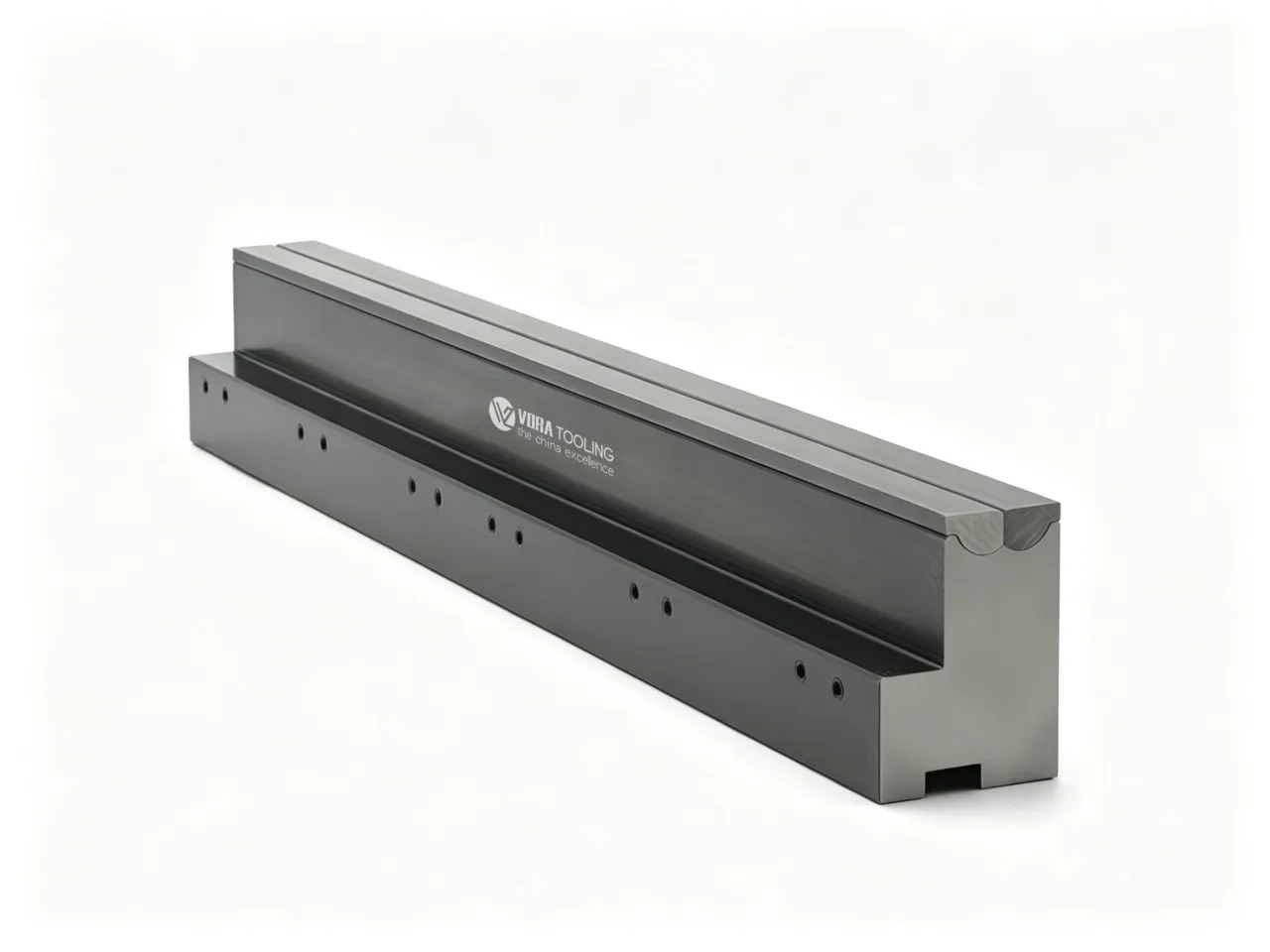
1.2 Advantages
(1)Wear-resistant coatings can be added to key parts like the flip plate, giving it a long service life.
(2)Wide application range, suitable for thick plates and large-radius bends.
(3)Improves material utilization and reduces production costs.
1.3 Limitations
(1)The structure of the mark-free flip-plate die is relatively complex, leading to higher manufacturing costs.
(2)If the coating or die is damaged, the repair process is complicated.
(3)Has certain requirements regarding the material type of the sheet.
2. Ball-Bearing Type
2.1 Working Principle
The V-opening entrance of a mark-free ball-bearing lower die is equipped with one or more rows of precision balls (or small rollers) that can rotate freely and smoothly. When the upper punch moves downward, forcing the sheet into the lower die, the sheet contacts the balls and causes them to rotate. This process converts the traditional sliding friction into rolling friction, thereby avoiding scratches on the sheet surface caused by the die.
2.2 Advantages
(1)Manufacturing cost is usually lower than other mark-free solutions.
(2)Can meet the bending needs of sheets with various thicknesses.
(3)Simple to operate.
2.3 Limitations
(1)Requires a good working environment (cleanliness, etc.).
(2)Has certain requirements regarding the material type of the sheet.
3. Rubber Type
3.1 Working Principle
The mark-free rubber lower die utilizes the "elastic deformation" characteristic of the rubber material to replace the "rigid contact" of traditional steel dies. When force is applied, the rubber deforms elastically, wrapping around and cushioning the sheet, evenly distributing the pressure. This avoids hard contact and fundamentally eliminates bending marks.
3.2 Advantages
(1)Short manufacturing lead time and low cost.
(2)Strong versatility – one die can be used for multiple purposes.
(3)Can protect the surface of special materials.
3.3 Limitations
(1)Limited number of repeated uses, poor durability.
(2)Has certain requirements regarding sheet thickness.
4. Anti-Mark Film Padding Method
4.1 Working Principle
The anti-mark film padding method involves installing a cushioning pad (anti-mark film or insert) at the key contact points of a standard lower die through embedding, adhesive bonding, or mechanical fastening. The elastic deformation of this pad cushions the hard contact between the sheet and the steel die, converting the concentrated line contact into a distributed surface contact, thereby eliminating indentations.
4.2 Advantages
(1)Simple to operate and easy to learn.
(2)Adaptable to various types of sheet metal.
(3)Very low cost.
4.3 Limitations
(1)The protection provided by the anti-mark film is limited (e.g., thickness, pressure limits).
(2)Lower production efficiency compared to dedicated die types.
Mark-free bending is a precision bending process that uses special techniques or material treatments to avoid indentations or scratches on the workpiece surface that occur during conventional bending. Its goal is to eliminate or greatly reduce bending marks or abrasions on the outer surface of the sheet metal, making it particularly suitable for products with high demands on surface quality. There are four main ways to achieve mark-free bending: the Flip-Plate Type, the Ball-Bearing Type, the Rubber Type, and the Anti-Mark Film Padding Method.
1. Flip-Plate Type
1.1 Working Principle
The lower die of a mark-free flip-plate die uses a flexible rotating plate. When the upper punch presses down, the flip plate does not come into direct rigid contact with the sheet. Instead, it "supports" the material through elastic deformation or a sliding action, distributing the force more evenly and avoiding concentrated local pressure. During the entire bending process, there is almost no relative sliding friction between the sheet and the flip plate. This fundamentally eliminates the indentations and scratches caused by the intense sliding friction in conventional bending.
1.2 Advantages
(1)Wear-resistant coatings can be added to key parts like the flip plate, giving it a long service life.
(2)Wide application range, suitable for thick plates and large-radius bends.
(3)Improves material utilization and reduces production costs.
1.3 Limitations
(1)The structure of the mark-free flip-plate die is relatively complex, leading to higher manufacturing costs.
(2)If the coating or die is damaged, the repair process is complicated.
(3)Has certain requirements regarding the material type of the sheet.
2. Ball-Bearing Type
2.1 Working Principle
The V-opening entrance of a mark-free ball-bearing lower die is equipped with one or more rows of precision balls (or small rollers) that can rotate freely and smoothly. When the upper punch moves downward, forcing the sheet into the lower die, the sheet contacts the balls and causes them to rotate. This process converts the traditional sliding friction into rolling friction, thereby avoiding scratches on the sheet surface caused by the die.
2.2 Advantages
(1)Manufacturing cost is usually lower than other mark-free solutions.
(2)Can meet the bending needs of sheets with various thicknesses.
(3)Simple to operate.
2.3 Limitations
(1)Requires a good working environment (cleanliness, etc.).
(2)Has certain requirements regarding the material type of the sheet.
3. Rubber Type
3.1 Working Principle
The mark-free rubber lower die utilizes the "elastic deformation" characteristic of the rubber material to replace the "rigid contact" of traditional steel dies. When force is applied, the rubber deforms elastically, wrapping around and cushioning the sheet, evenly distributing the pressure. This avoids hard contact and fundamentally eliminates bending marks.
3.2 Advantages
(1)Short manufacturing lead time and low cost.
(2)Strong versatility – one die can be used for multiple purposes.
(3)Can protect the surface of special materials.
3.3 Limitations
(1)Limited number of repeated uses, poor durability.
(2)Has certain requirements regarding sheet thickness.
4. Anti-Mark Film Padding Method
4.1 Working Principle
The anti-mark film padding method involves installing a cushioning pad (anti-mark film or insert) at the key contact points of a standard lower die through embedding, adhesive bonding, or mechanical fastening. The elastic deformation of this pad cushions the hard contact between the sheet and the steel die, converting the concentrated line contact into a distributed surface contact, thereby eliminating indentations.
4.2 Advantages
(1)Simple to operate and easy to learn.
(2)Adaptable to various types of sheet metal.
(3)Very low cost.
4.3 Limitations
(1)The protection provided by the anti-mark film is limited (e.g., thickness, pressure limits).
(2)Lower production efficiency compared to dedicated die types.
Recent Posts
Stay tuned for more updates

Need to reach us?
Leaders in industrial manufacturing & technology since 1992.