SEARCH WHAT YOU WANT

2026-04-21
Creating Exclusive Bending Machine Dies Based on Product Characteristics
In the field of sheet metal fabrication, when faced with differentiated requirements for product shape, size, and precision, the versatility of standard tooling can actually become a limitation. This is where "custom press brake tooling" becomes the key to improving efficiency and quality.
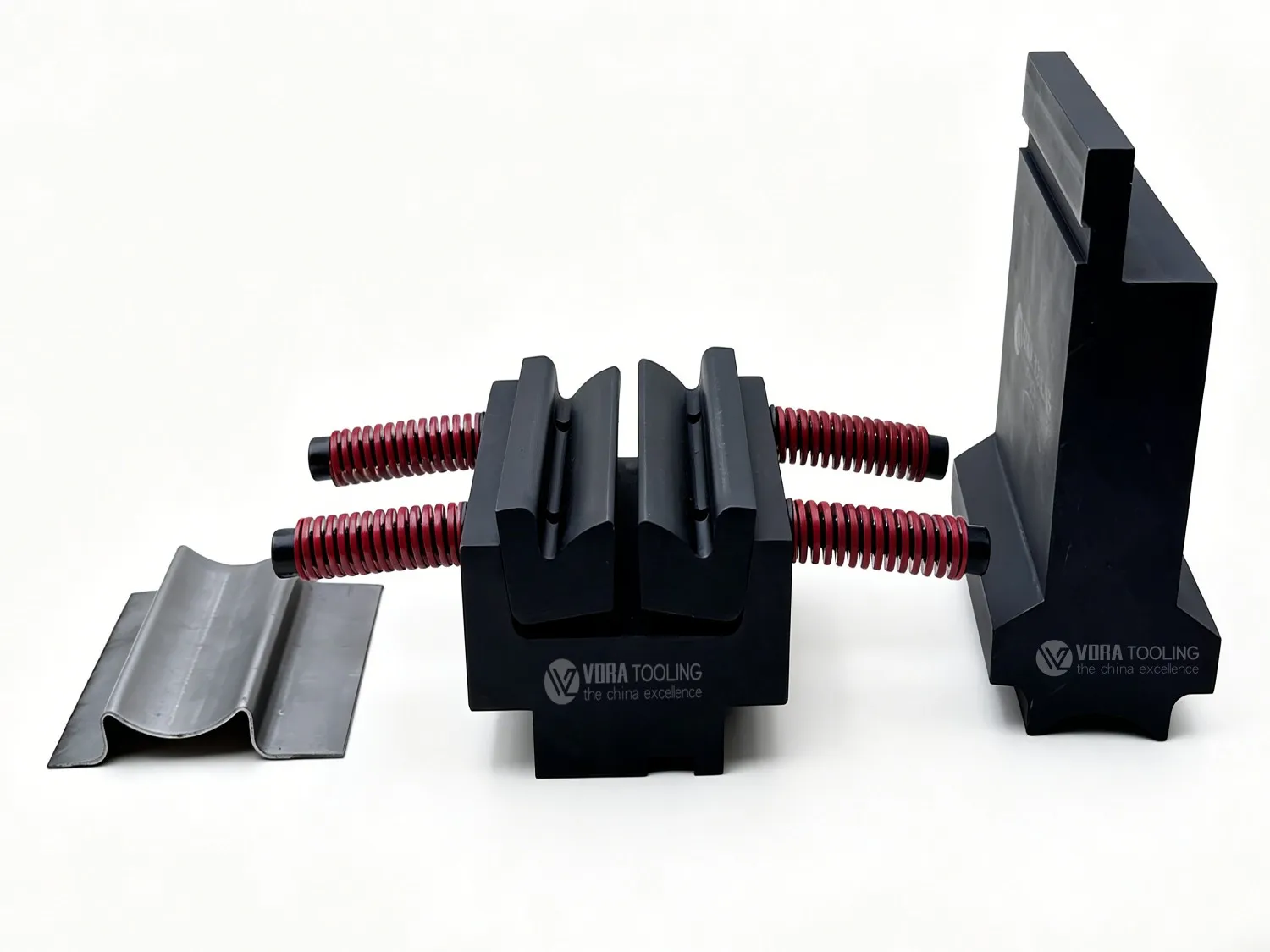
1. Why Customize Dies Based on Product Characteristics?
(1) Optimizing production efficiency and cost, simplifying processes and reducing secondary operations, etc.
(2) Ensuring product functionality and precision, guaranteeing product appearance quality
(3) Adapting to the different characteristics of various materials, reducing material damage
2. How to Customize Dies Based on Product Characteristics
(1) Understand the product characteristics
① Material type and thickness
② Bending angle, radius, and bending direction
③ Dimensional tolerance, angular tolerance, and geometric tolerance
④ Product size and shape
⑤ Predetermine the bending sequence and check for collision issues
(2) Select die type and design die structure
① Upper die design and selection: tip angle, tip radius, and tip shape, etc.
② Lower die design and selection: V-die opening width, shoulder radius and shape of the lower die, etc.
③ Special structures and customized design: stepped dies, flattening dies, arc dies, and relief design, etc.
(3) Use CAD modeling and simulation: Check for potential collisions, verify the bending sequence, and predict springback.
3. Case Study:
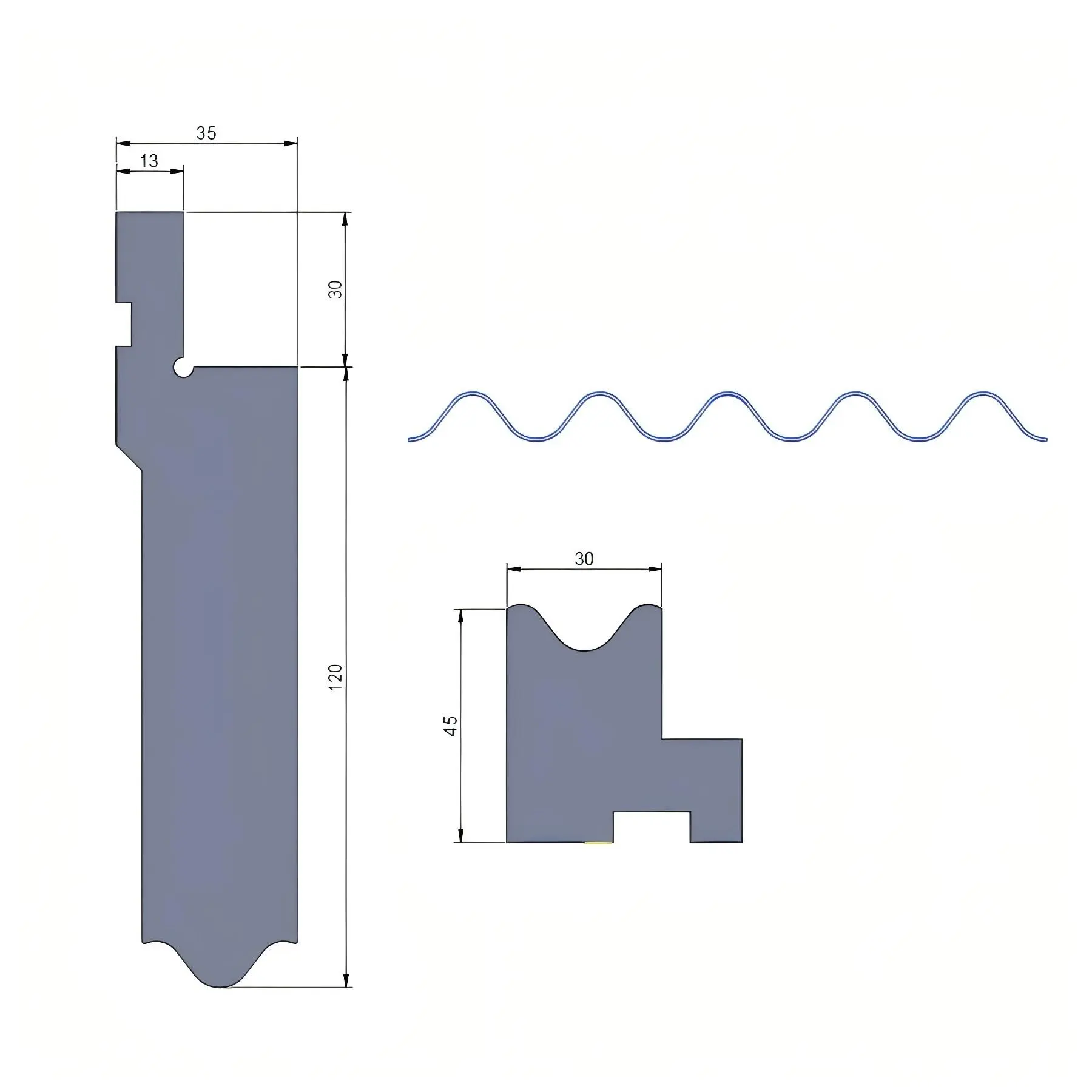
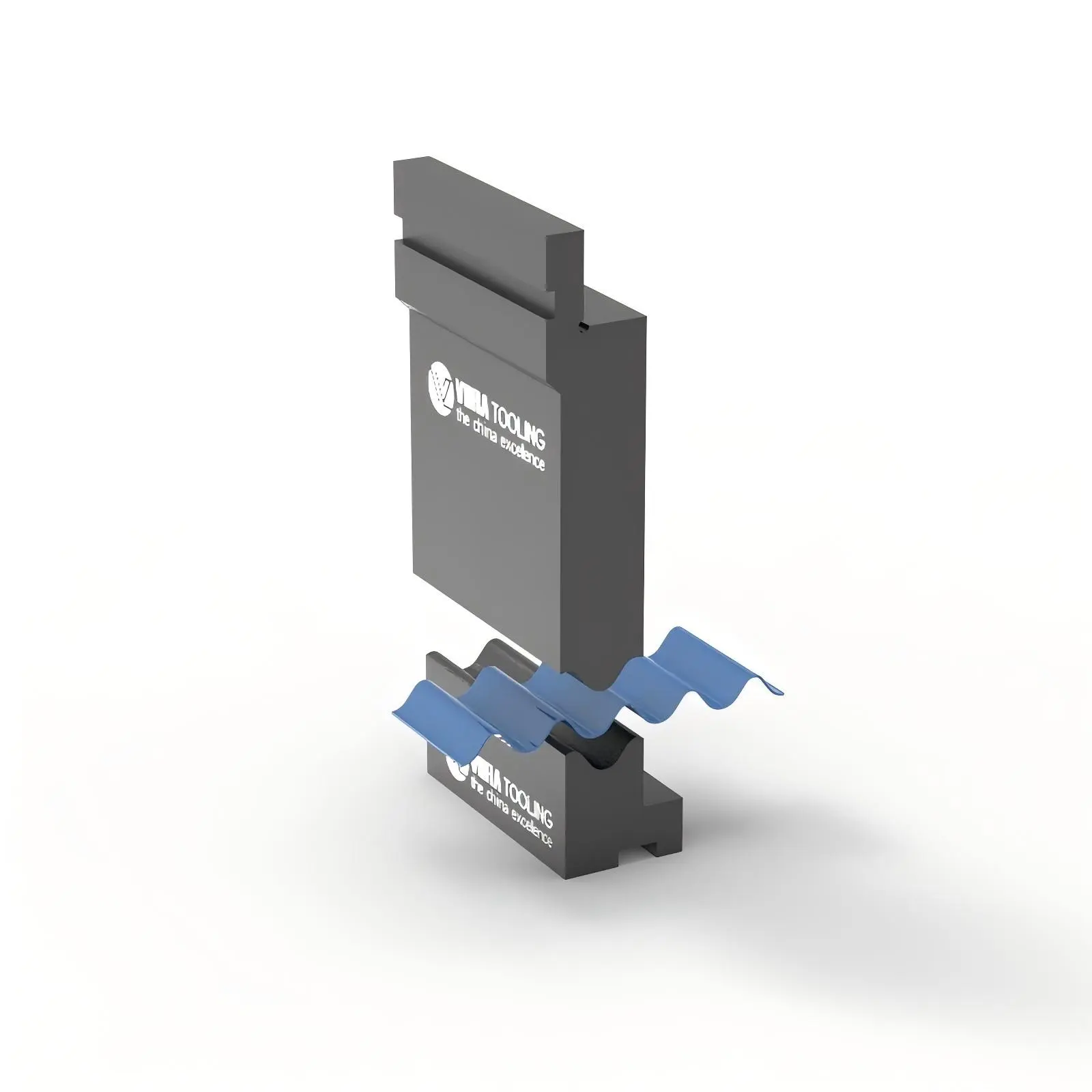
(1) Product: Wave-shaped product, material is steel plate, thickness 0.6 mm, inside radius 4.4 mm
(2) Design steps:
① Design the upper die based on product material, thickness, and R angle: Its tip radius must perfectly match the product's trough and be polished to a mirror finish to prevent scratching.
②Design the lower die based on product thickness and accuracy requirements: Select the V-opening based on material thickness. Use a 16 mm V-opening with a large shoulder radius.
③Perform strategic relief cutting on the sides of both dies to provide clearance for adjacent waves during forming, preventing catastrophic collisions.
④Determine the bending sequence and simulate the bending process using CAD software to check for potential collisions.
4. Conclusion
In the fiercely competitive and rapidly evolving modern sheet metal manufacturing industry, customizing press brake tooling around the product is far more than just a recommended best practice. It has essentially become a definitive strategic cornerstone for companies to build core manufacturing capabilities and achieve product excellence and differentiation.
This strategic choice stems from deep industrial logic. The traditional "adapt the product to standard tooling" mindset often means compromising product design, production efficiency, or final quality. When tooling design is completely reoriented around the product, every bend radius, angle, and process sequence directly responds to the product's functional requirements and aesthetic definition. This not only significantly improves first-precision accuracy, reduces setup waste and secondary processing, but more importantly, it transforms the manufacturing stage from passive execution to active empowerment. Companies can therefore respond to more complex, precise, or innovative product designs, turning process bottlenecks into competitive advantages. Investing in this product-oriented tooling development means investing in shorter time-to-market, higher quality consistency, and greater market adaptability—this is the definitive path to establishing long-term advantages in a homogenized competitive landscape.
In the field of sheet metal fabrication, when faced with differentiated requirements for product shape, size, and precision, the versatility of standard tooling can actually become a limitation. This is where "custom press brake tooling" becomes the key to improving efficiency and quality.
1. Why Customize Dies Based on Product Characteristics?
(1) Optimizing production efficiency and cost, simplifying processes and reducing secondary operations, etc.
(2) Ensuring product functionality and precision, guaranteeing product appearance quality
(3) Adapting to the different characteristics of various materials, reducing material damage
2. How to Customize Dies Based on Product Characteristics
(1) Understand the product characteristics
① Material type and thickness
② Bending angle, radius, and bending direction
③ Dimensional tolerance, angular tolerance, and geometric tolerance
④ Product size and shape
⑤ Predetermine the bending sequence and check for collision issues
(2) Select die type and design die structure
① Upper die design and selection: tip angle, tip radius, and tip shape, etc.
② Lower die design and selection: V-die opening width, shoulder radius and shape of the lower die, etc.
③ Special structures and customized design: stepped dies, flattening dies, arc dies, and relief design, etc.
(3) Use CAD modeling and simulation: Check for potential collisions, verify the bending sequence, and predict springback.
3. Case Study:
(1) Product: Wave-shaped product, material is steel plate, thickness 0.6 mm, inside radius 4.4 mm
(2) Design steps:
① Design the upper die based on product material, thickness, and R angle: Its tip radius must perfectly match the product's trough and be polished to a mirror finish to prevent scratching.
②Design the lower die based on product thickness and accuracy requirements: Select the V-opening based on material thickness. Use a 16 mm V-opening with a large shoulder radius.
③Perform strategic relief cutting on the sides of both dies to provide clearance for adjacent waves during forming, preventing catastrophic collisions.
④Determine the bending sequence and simulate the bending process using CAD software to check for potential collisions.
4. Conclusion
In the fiercely competitive and rapidly evolving modern sheet metal manufacturing industry, customizing press brake tooling around the product is far more than just a recommended best practice. It has essentially become a definitive strategic cornerstone for companies to build core manufacturing capabilities and achieve product excellence and differentiation.
This strategic choice stems from deep industrial logic. The traditional "adapt the product to standard tooling" mindset often means compromising product design, production efficiency, or final quality. When tooling design is completely reoriented around the product, every bend radius, angle, and process sequence directly responds to the product's functional requirements and aesthetic definition. This not only significantly improves first-precision accuracy, reduces setup waste and secondary processing, but more importantly, it transforms the manufacturing stage from passive execution to active empowerment. Companies can therefore respond to more complex, precise, or innovative product designs, turning process bottlenecks into competitive advantages. Investing in this product-oriented tooling development means investing in shorter time-to-market, higher quality consistency, and greater market adaptability—this is the definitive path to establishing long-term advantages in a homogenized competitive landscape.
Recent Posts
Stay tuned for more updates

Need to reach us?
Leaders in industrial manufacturing & technology since 1992.